Early Signs of Autism in Toddlers: A Guide for Parents in Pakistan
Since the world went into lockdown, parents of young children across Pakistan have been sharing a common, quiet worry. “My toddler isn’t talking as much as other kids.” “He doesn’t make eye contact.” “She prefers playing alone with the tablet.” These concerns, amplified by an era of increased screen time and reduced social interaction, often lead to a single, frightening question: Could it be autism?
If you’ve had this worry, you are not alone. It’s crucial to address this topic with clarity and compassion.
Screen Time vs. Autism: The Critical Difference
Before we go any further, it is critical to state this clearly: Increased screen time and a lack of social activity do not cause Autism Spectrum Disorder (ASD). Autism is a complex neurodevelopmental condition with genetic and biological origins. It is not caused by parenting choices.
However, the environmental factors of the last few years—especially for children who spent crucial developmental months in lockdown—can lead to social and communication delays with symptoms that mimic some early signs of ASD. For a child who may already be on the spectrum, these factors can also make their symptoms more pronounced.
The Post-COVID Effect: What Parents Are Seeing
The period from birth to age three is a critical window for developing social and communication skills. Children learn by watching faces, hearing language, and interacting with peers. The pandemic replaced much of this with:
- Reduced Peer Interaction: No playdates, no school, no trips to the park.
- Masked Faces: Babies and toddlers missed out on seeing full facial expressions.
- Increased Screen Time: Tablets and phones often became digital babysitters out of necessity.
As a result, pediatricians and therapists in Pakistan are seeing a rise in toddlers with speech delays, poor social responsiveness, and intense interests in screens—traits that overlap with early indicators of ASD, causing significant confusion and anxiety for parents.
Understanding Autism in Pakistan
Getting clear data is challenging, but organizations like the World Health Organization and local medical bodies estimate that around 1 in every 68 children in Pakistan may be on the autism spectrum. Awareness is growing, but accessing a timely and accurate diagnosis remains a significant hurdle for many families due to a lack of trained specialists and cultural stigma.
A Proactive Action Plan for Worried Parents
If you are worried about your child’s development, the goal is not to self-diagnose but to take positive, proactive steps.
-
Prioritize Interactive Play
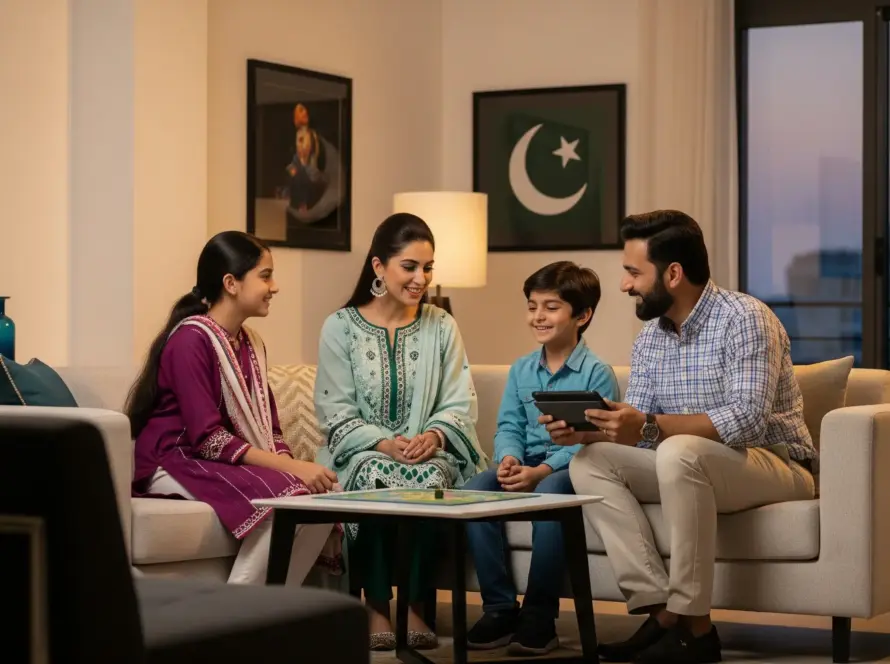
The best antidote to passive screen time is active, face-to-face play. Get down on the floor with your child. Roll a ball back and forth, build with blocks, sing nursery rhymes (machli jal ki rani hai). These simple, reciprocal games are the building blocks of social communication.
-
Reduce & Replace Screens
Create a plan to gradually reduce passive screen time. Replace it with compelling alternatives. A dedicated “art basket” with crayons and paper, or a walk to the corner store to see the neighbourhood cats, can be more engaging than any screen.
-
Narrate Everything
Talk to your child constantly, even if they aren’t talking back. Describe what you’re doing (“I’m washing the dishes,” “Let’s put on your warm yellow shirt from The Day Dream collection so we can go outside!”). This language immersion is critical for their speech development.
-
Observe and Document
Keep a simple, objective journal of your specific concerns. For example: “This week, he did not respond to his name 5 out of 10 times,” or “He can say 10 words but does not use them to ask for things.” This log will be incredibly valuable when you speak to a professional.
-
Seek Professional Guidance (The Most Important Step)
If your gut instinct tells you something is wrong, trust it. The internet cannot diagnose your child.
- Start with your pediatrician (bachon ka doctor). They are your first and best resource.
- Ask for a referral to a developmental pediatrician or a child psychologist. Reputable hospitals like Aga Khan University Hospital have dedicated developmental centres.
- Early intervention is key. The earlier a child gets the right support, the better their long-term outcome.
At Orange, our belief in a “story-driven” brand is rooted in this very idea of connection. The stories we tell and the comfortable clothes we create are designed to encourage a childhood of active play, imagination, and real-world interaction—things that are essential for every child’s development.
Navigating these worries is difficult, but you are your child’s best advocate. By fostering a rich, interactive environment and seeking professional advice when needed, you are taking the most powerful and loving steps possible to support your child’s unique journey.